 Hybrid Veteran Vehicle Services
1. Confirm exactly what you are buying
A conventional hybrid (HEV) charges itself and does not plug in. A plug-in hybrid (PHEV) has a larger battery you charge from the wall plus a gas engine. An EV runs on the battery alone. Battery size, charging speed, and warranty can change by year and trim, so look up the exact trim, not just the model.
2. Run the VIN before you see the car
Check title history for salvage, flood, rebuilt, or lemon buyback, and look up open recalls on the NHTSA recall lookup. Flood history matters more on a hybrid or EV, because water in high-voltage parts is a safety problem, not just a cosmetic one.
3. Get battery data, and know its limits
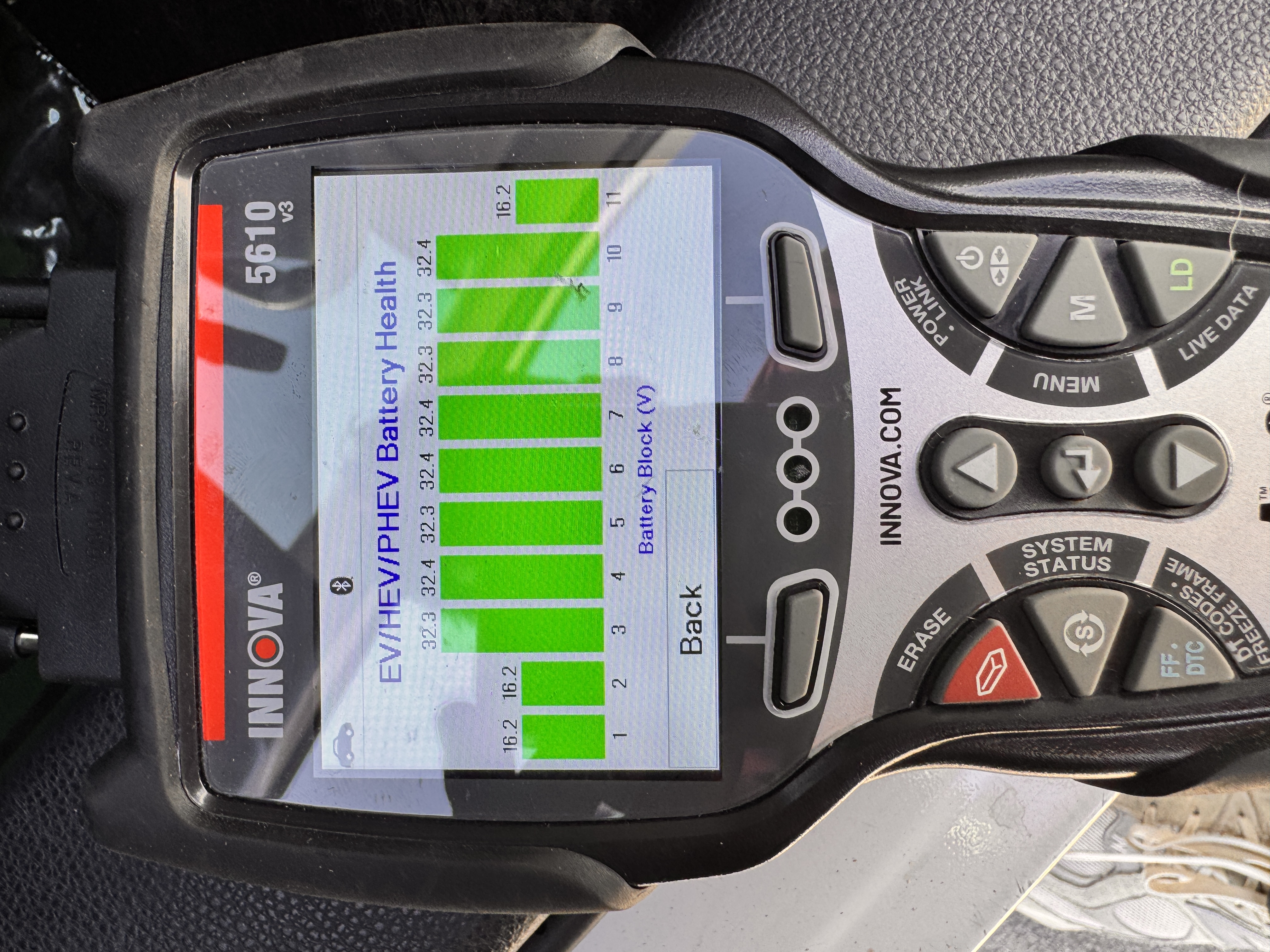
Ask for battery state of health or block voltages from a scan tool that supports that exact car. What a scan can show varies by make and model: some cars report state of health, others only report block voltages and fault codes. An honest inspection tells you which one you got.
4. Scan for codes before the engine starts
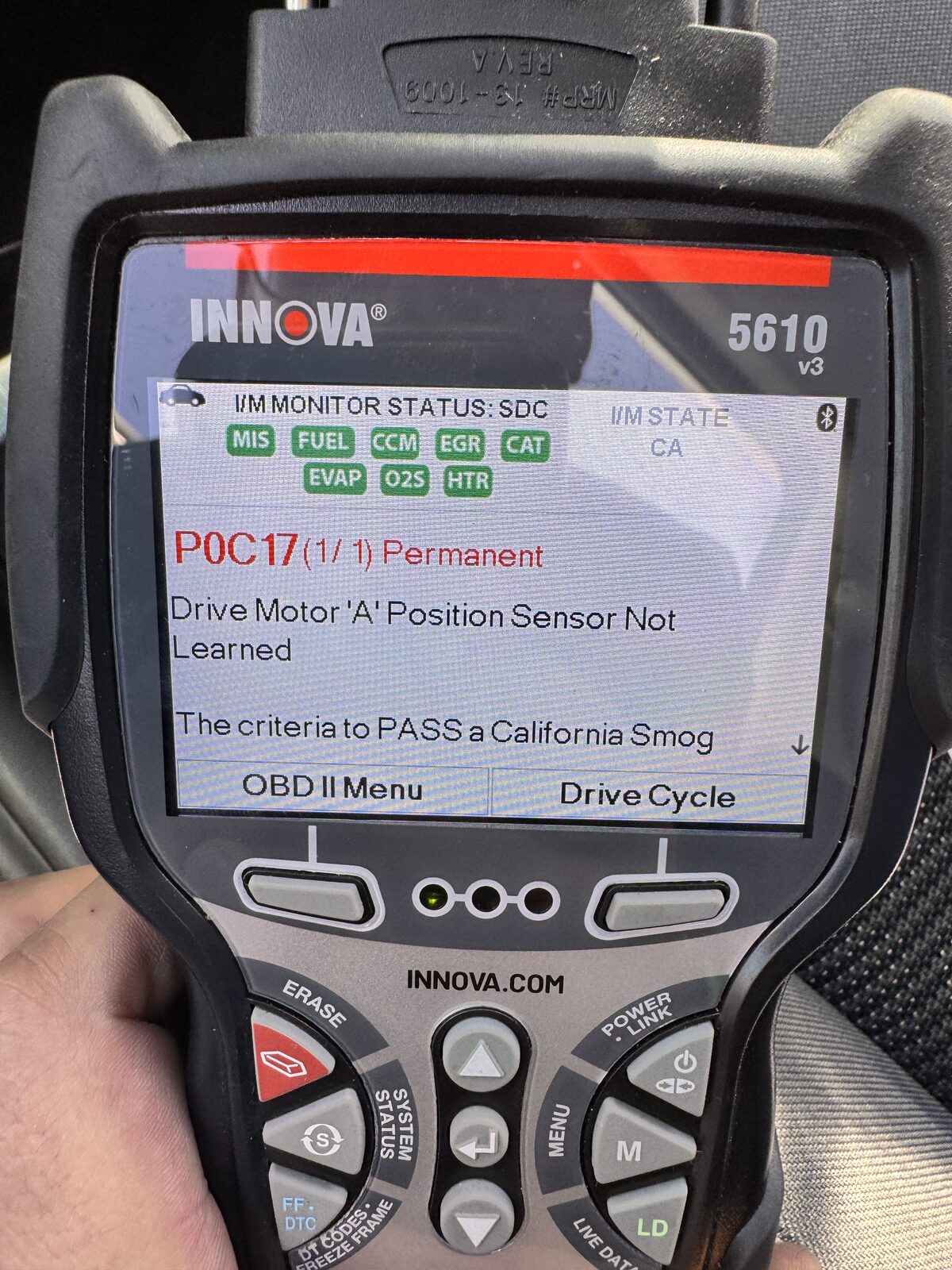
Clearing codes turns the warning light off, but many newer cars keep "permanent" fault codes that a scan tool cannot erase. They clear only after the car's own self-test passes. Scanning before the test drive catches a problem a seller may have reset that morning.
5. Look under the car and at the battery enclosure
Most EV packs and many hybrid packs sit low in the car. Look for scrapes, dents, or corrosion on the battery enclosure, and for signs of water inside the cabin or trunk. Check the 12-volt battery too; a weak one causes strange electrical faults and no-start problems on hybrids and EVs.
6. Test charging on a PHEV or EV
Plug it in. Confirm the charge port latches, the car starts charging, and the charging cable that is supposed to come with the car is actually there. If you plan to use DC fast charging, confirm the car supports it and at what speed.
7. Drive it like you will own it
On a hybrid, the switch between gas and electric power should be smooth. On any of these cars, regenerative braking should feel even, and there should be no reduced-power messages. EVs are quiet, which makes wheel bearing, suspension, and motor whine easier to hear, so listen with the radio off. Check heat and A/C, which also affect EV range.
8. Get the paperwork right
At a dealer, read the FTC Buyers Guide on the window. It says whether the car is sold as-is or with a warranty, and it overrides conflicting terms in the contract. Get any promise about the battery, included charging equipment, or repairs written on it. The FTC's used-car guide explains how.
Check whether the battery warranty is still active and transfers to you, in writing, with the manufacturer. Also note that the federal used EV credit is not available for vehicles acquired after September 30, 2025, so do not let a claimed tax credit justify the price.
Red flags that should stop the deal
- The seller will not give you the VIN.
- Salvage, flood, or an unexplained rebuilt title.
- High-voltage, charging, or reduced-power warnings.
- The car will not complete a charge.
- Battery data is unavailable and the seller still calls the battery "like new."
- The seller refuses an independent inspection.
- Damage or heavy corrosion on the underbody or battery enclosure.
Who wrote this
Want a technician to go through this list on a specific car? Request an inspection.
Common Questions
What is the most important thing to check on a used hybrid or EV?
The high-voltage battery, read three ways: battery data from a scan tool where the car supports it, stored and permanent fault codes, and how the car behaves on a road test. A battery replacement is usually the most expensive repair these cars face.
Is the dashboard range estimate a good measure of battery health?
No. Range estimates move with temperature, tires, recent driving, and how the car was last charged. Treat the range number as a clue, not a battery health reading.
Can I still get the federal tax credit on a used EV?
Not for most purchases. The IRS says the previously-owned clean vehicle credit is not available for vehicles acquired after September 30, 2025. Be skeptical of any ad that suggests otherwise.
Do I need an independent inspection if the dealer already certified the car?
Yes. The Federal Trade Commission recommends paying an independent mechanic to inspect a used car even when the dealer has certified it.